


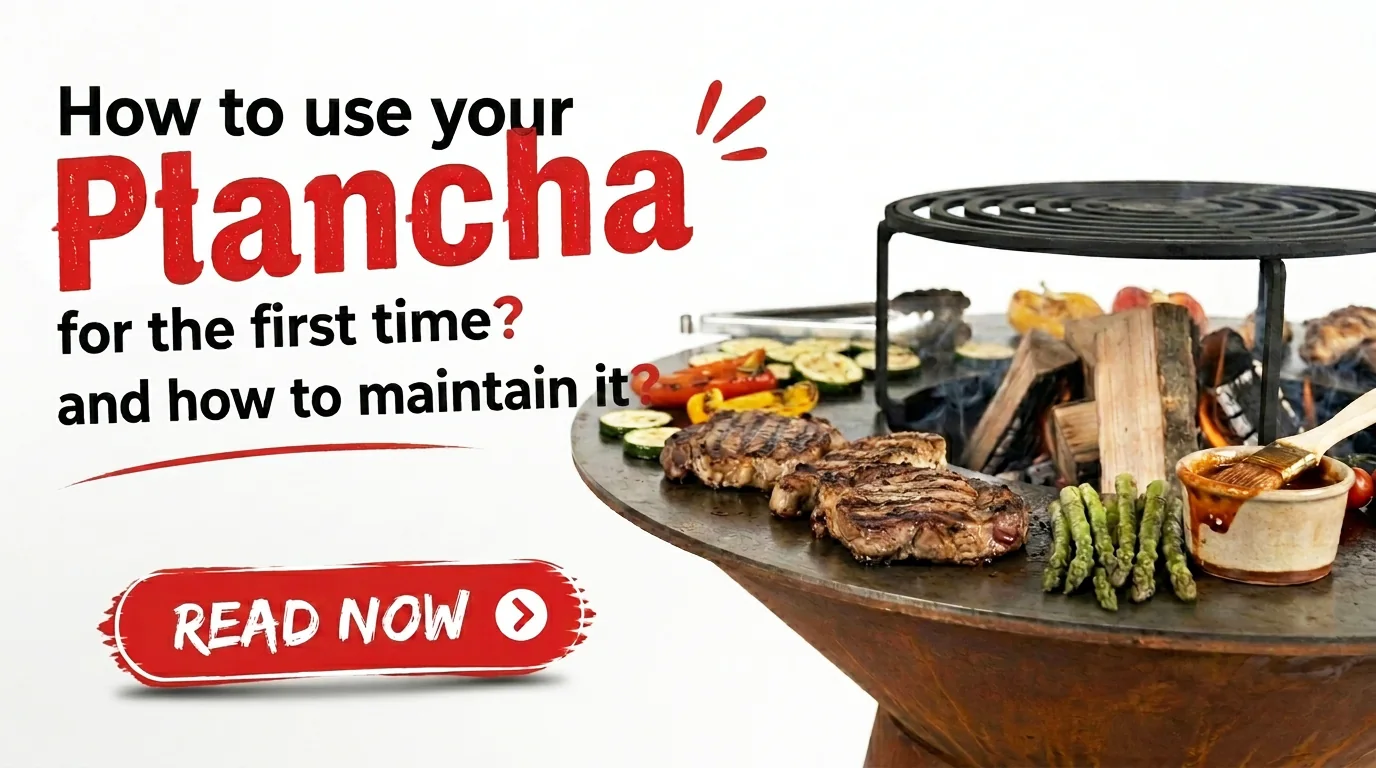
How to Use Your Plancha for the First Time
Seasoning the cooking plate, choosing firewood, controlling heat, cleaning, and long-term care.
Good first-use seasoning and routine care help a Brasero Plancha cooking plate develop a practical cooking surface and reduce the risk of rust. The process is straightforward: clean, warm gradually, apply a thin layer of oil, cook, scrape, dry, and re-oil.
Before the first cook, clean the plate with warm water and dry it completely. Warm it gradually, apply a thin even layer of vegetable oil, allow the oil to heat until it begins to smoke lightly, then wipe off excess oil. Repeat the oiling process during the first few uses.
1. First Use: Season the Cooking Plate
- Clean the cooking plate with warm water and dry it thoroughly with a clean cloth.
- Start with a small fire and allow the plate to warm up slowly.
- When the plate is fully heated, spread a thin, even layer of vegetable oil over the cooking surface.
- Let the oil heat until it begins to smoke lightly so it can form a seasoned protective layer.
- Allow the plate to cool slightly, then wipe away excess oil with a clean cloth.
- Repeat the oiling process two or three times during the first few uses to build up the cooking surface.
2. What Firewood Should You Use?
Use clean, dry hardwood with a moisture level below 20%. Dry wood is easier to ignite, burns more efficiently, and produces less smoke during cooking.
Beech and ash are given as examples of hardwoods that burn steadily and provide long-lasting heat. Avoid fresh or green wood, treated wood, painted wood, and wood containing chemicals.
Very dense hardwood can create extremely high temperatures. Avoid over-fueling the fire because excessive heat may deform the cooking plate.
3. What Oil Should You Use?
Vegetable oils can generally be used on the plancha. During the first few uses, a small amount of vegetable oil or olive oil can help build the darker seasoned cooking surface that protects the cooking plate.
Use a thin layer. More oil is not better; excess oil can pool or create unnecessary residue.
4. How to Control Cooking Temperature
Once the firewood has burned down and formed hot embers, temperature can be controlled by moving the embers beneath the cooking plate.
| Ember Position / Amount | Effect | Typical Use |
|---|---|---|
| More embers | Higher temperature | Searing and fast cooking |
| Fewer embers | Lower temperature | Gentler cooking |
| Embers toward the center | Stronger central heat | Hot-zone cooking |
| Embers toward outer areas | Gentler outer zones | Holding food warm or slower cooking |
This lets one plate operate with multiple heat zones—for example, a hotter area for searing meat and a cooler zone for vegetables or keeping cooked food warm.
5. How to Clean the Cooking Plate
During cooking, use a spatula to remove food residue and move it toward the center so it can burn away. After cooking, while the plate is still warm and safe to work on, scrape away remaining food and grease.
Wipe the surface with a clean cloth lightly coated with cooking oil. Regular cleaning is preferable to allowing a thick layer of residue to accumulate.
For stubborn residue, follow the care instructions for your cooking plate and use a suitable scraper. Avoid sudden temperature changes that may damage the plate. Finish by drying the plate and applying a thin protective layer of oil.
6. Routine Care Checklist
- Use clean, dry fuel and avoid chemically treated wood.
- Build heat gradually instead of over-fueling the fire.
- Scrape residue during and after cooking.
- Do not leave water standing on the cooking plate.
- Apply a thin layer of cooking oil after cleaning.
- Protect the plancha from prolonged rain and moisture when it is not in use.
Need a Brasero Plancha for your market?
Tell us your target cooking plate size, material, finish, quantity, destination market, and packaging requirements.